
There was a time when movement was not something we scheduled. It was something we lived.
We breathed deeply without being told to.
We stood upright without effort.
We moved because the body knew how.
Somewhere along the way, that intelligence was lost. And two very different paths emerged to help us remember. One came from the stillness of ancient wisdom. The other from the urgency of healing. Yoga. And Pilates.
They are often placed side by side today, offered in the same studios, spoken of in the same breath, sometimes even blended into one indistinguishable flow.
But their stories begin in very different places.
The body that needed to heal
Joseph Pilates did not begin with spirituality. He began with fragility. As a child in late-19th-century Germany, he was weak, often ill, struggling with asthma and disease. His body did not feel safe living in.
So he began to study it.
He watched animals move.
He read anatomy books.
He observed breath.
He experimented endlessly.
During the First World War, while interned in England, he worked with injured soldiers. There was no modern rehabilitation, no sophisticated equipment, no luxury of time. Only bodies that needed to move again. Using bed springs, simple resistance, and precise control, he helped men who could barely walk reclaim function. What emerged was not exercise. It was a restoration.
He called it Contrology — the art of controlling the body with the mind. Not domination. Communication.
The mat came first
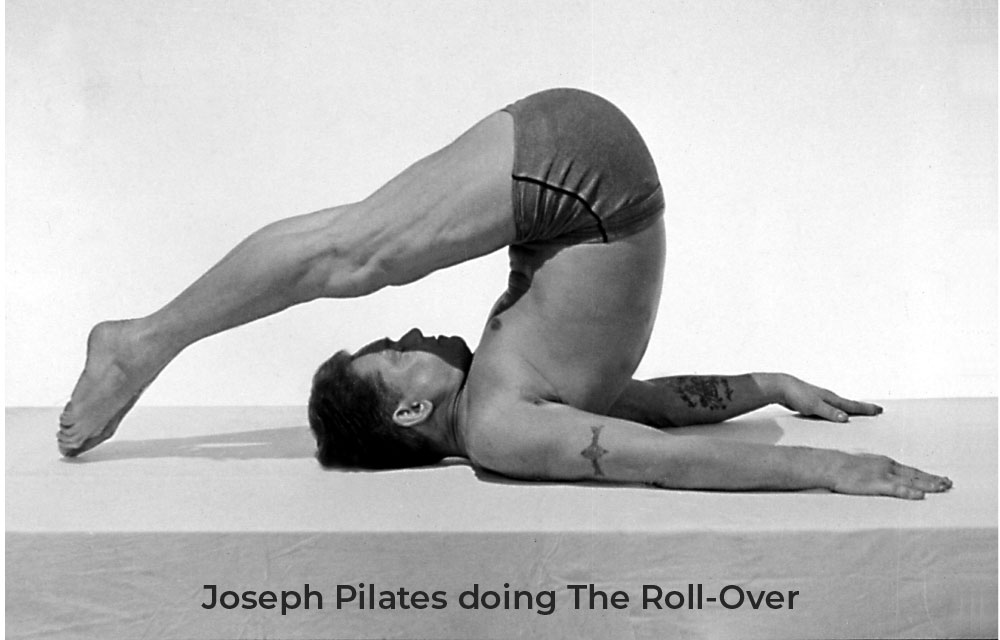
Before studios. Before machines. Before trends. There was the mat.
On the mat, nothing supports you except your own awareness.
Every tremor speaks.
Every breath reveals truth.
Every imbalance shows itself honestly.
Mat Pilates teaches the body to organize itself from within; to support the spine, protect the organs, and move without excess effort.
It is quiet work. And that is why it is powerful. Because the nervous system listens in silence.
The ancient stillness of yoga
Yoga was born elsewhere, thousands of years earlier, under different skies. It was never meant to sculpt the body. It was meant to quiet the mind.
The physical postures were not goals. They were gateways, ways to prepare the body to sit, to breathe, to observe consciousness itself.
Yoga asks different questions:
Who am I beneath my thoughts?
What remains when the mind settles?
How does breath become prayer?
Yoga opens. Pilates organizes.
Yoga dissolves. Pilates contains.
Two directions, one body
Yoga works from the inside out, mind to body. Pilates works from the outside in, body to mind.
Neither is better. But each answers a different need.
Some people open before they are supported. Some soften before they feel safe.
And that is where the imbalance begins:
A body without support collapses inward.
A body without softness becomes rigid.
True wellbeing lives between those extremes.
When the body learns safety
Pilates does something subtle but profound. It teaches the body where it is in space. Through breath, alignment, and precise movement, the nervous system begins to feel something rare: stability. Not force, not tension, but internal containment.
When the body knows it is supported, the mind no longer needs to remain alert. This is why Pilates is so regulating. Not because it calms you, but because it convinces the body that calm is allowed.
When breath meets structure
Yoga then enters differently. Once the body feels held, yoga can open without overwhelm:
The breath travels more freely.
The heart softens naturally.
The mind settles without effort.
This is why combining yoga and Pilates is so intelligent, but not at the same time. They are different conversations. Different languages. The body learns best when each is spoken clearly.
Movement as remembrance
Neither yoga nor Pilates was created for appearance. They were created for remembering:
– Remembering how to breathe
– How to stand
– How to inhabit the body without fear
Joseph Pilates once said, “Physical fitness is the first requisite of happiness.”
Not because fitness creates happiness, but because a body that functions well allows the mind to rest.
Yoga said something similar long before: When the fluctuations of the mind cease, the seer rests in their true nature.
Different words. Same truth.
Why we still need both
Today, we live disconnected from sensation:
We sit too long.
We breathe too shallowly.
We think too much.
Yoga reminds us to feel. Pilates reminds us how to hold ourselves while we do.
One teaches presence. The other teaches support.
One opens the door. The other builds the frame.
The Ombo Yoga approach
At Ombo Yoga, movement is not performance; it is a conversation.
Pilates is practiced to restore inner structure, not to harden the body, but to give it trust.
Yoga is practiced to restore inner space, not to escape life, but to inhabit it more fully.
Together, they create something deeper than technique. They create a body that feels like home. And when the body feels like home,
the mind no longer needs to run.
✨ Some movements strengthen.
✨ Some movements soften.
The most healing ones do both, in their own time.