
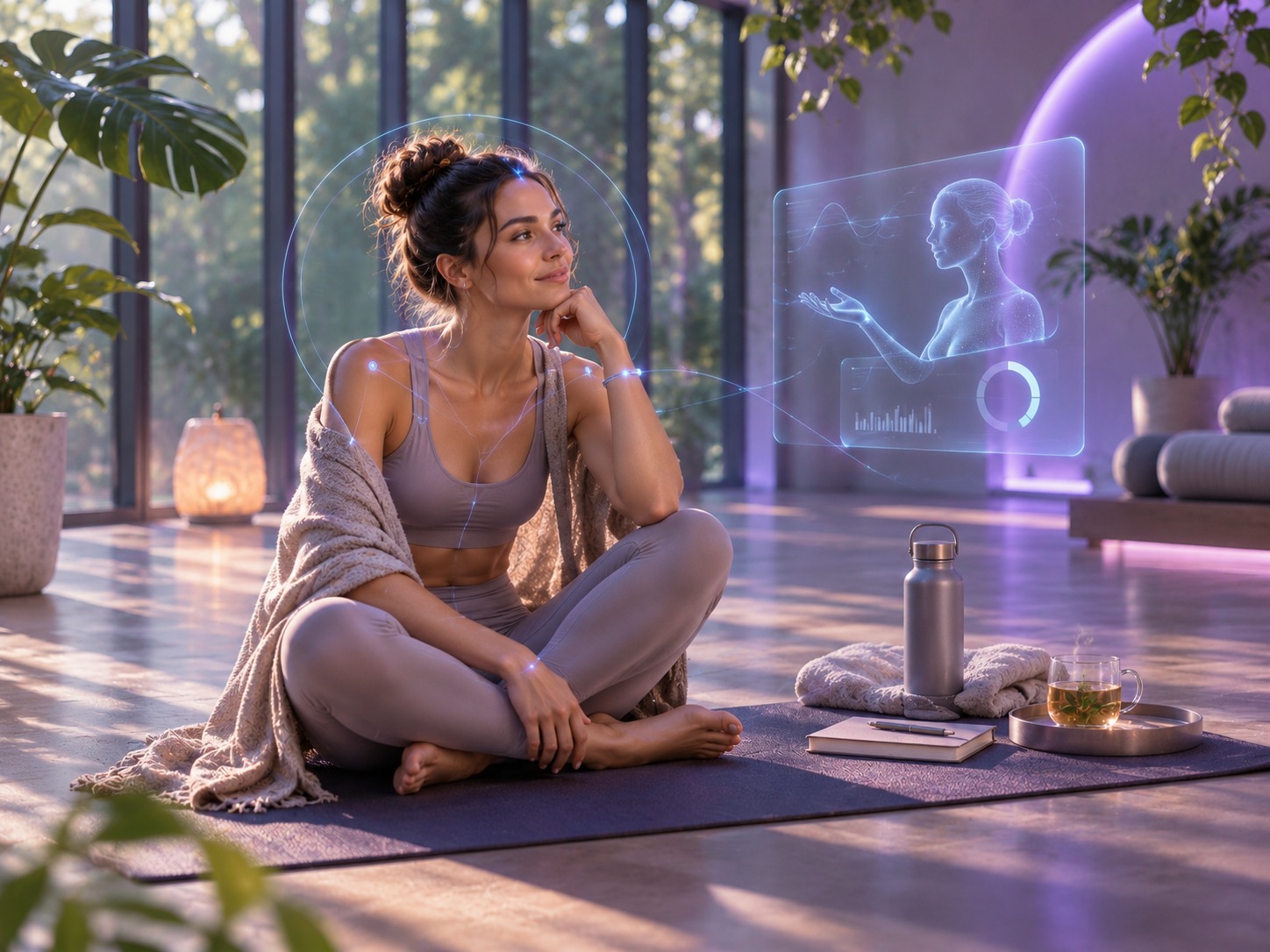

The future of yoga may look very different from the familiar studio environment.
Imagine a virtual yoga instructor capable of analyzing body alignment through cameras and movement sensors, providing immediate feedback and adapting sequences according to individual needs. This is not entirely science fiction.
Research published in 2025 and 2026 has already explored AI-assisted yoga posture recognition, computer vision, machine learning, and wearable sensing technologies. As these systems develop, they could make personalized yoga instruction more accessible, especially for people practicing at home.
Real-Time Prediction of Correct Yoga Asanas in Healthy Individuals With Artificial Intelligence Techniques: A Systematic Review for Nursing (2025)
Journal: Nursing Open
Read the 2025 systematic review
Future applications may include:
- AI-generated yoga sequences adapted to individual mobility and preferences.
- Smart mirrors providing visual posture feedback.
- Wearable devices monitoring movement and physiological signals.
- Virtual reality environments offering immersive yoga experiences.
- Digital assistants supporting consistent home practice.
However, recognizing a posture is not the same as understanding a person’s physical limitations, emotional state or subjective experience.
2. From Smart Yoga Mats to Intelligent Studios
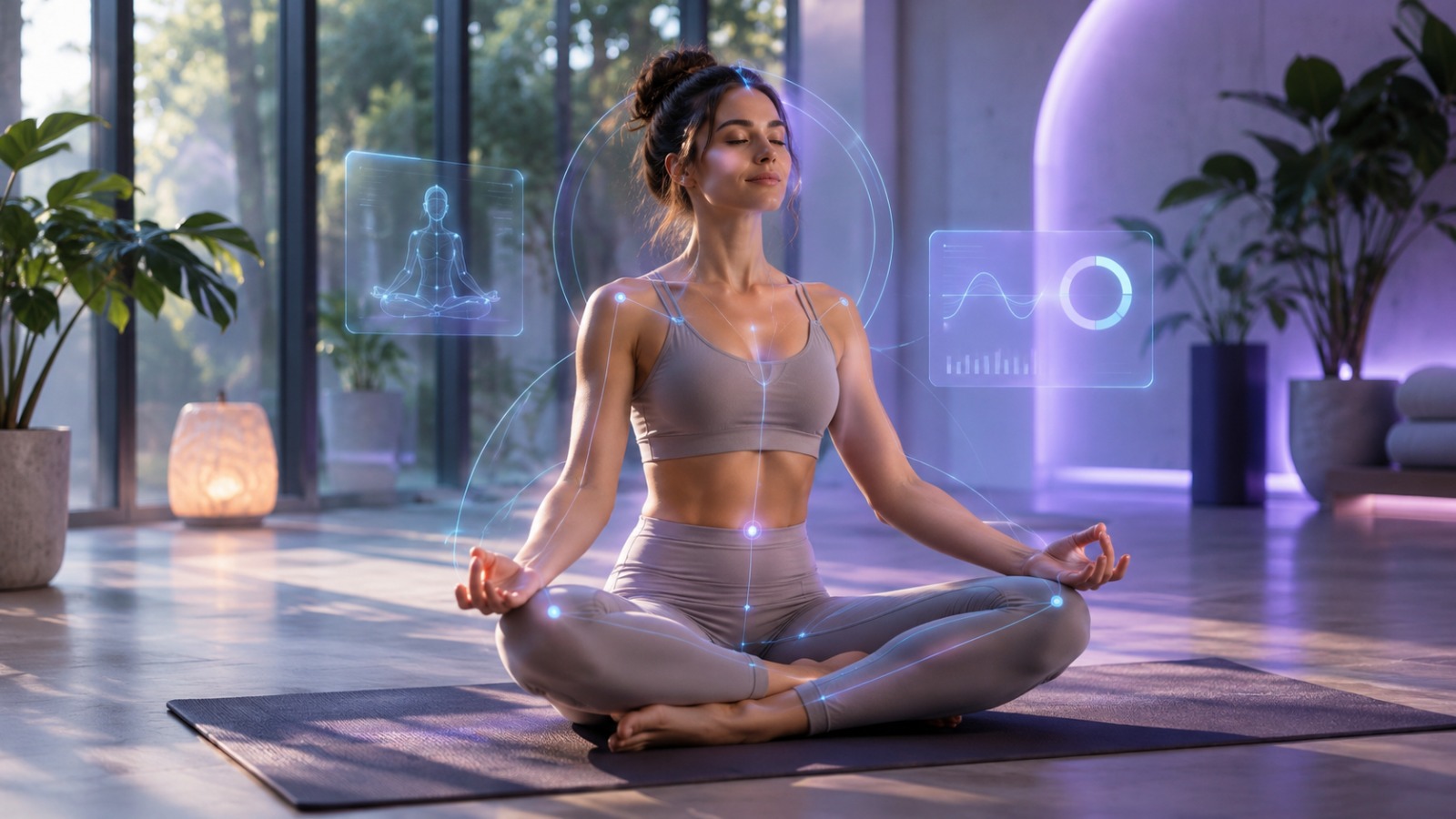
By the 2030s, yoga studios could combine traditional teaching with interactive technologies. Imagine entering a studio where lighting and sound adjust to the atmosphere of the session. An intelligent mat might detect pressure distribution and balance. A wearable device could provide information about movement patterns, heart rate, or recovery. AI could help instructors offer more individualized guidance while managing classes with participants of different experience levels. Such possibilities are exciting, but they also raise questions.
Will practitioners feel empowered by this information? Or could constant measurement turn yoga into another performance-driven activity?
A practice traditionally associated with awareness and inner observation might become increasingly dependent on external data.
The challenge will not be how much technology we can introduce into yoga, but how thoughtfully we choose to use it.
Research: Hybrid Vision–IMU Deep Learning Framework with Graph Convolutional Networks and Attention for Personalized Yoga Posture Identification (2026)
Journal: Scientific Reports
Read the 2026 posture-identification study
Research: Metaverse-Enabled Yoga Coach Avatar Using AI-Enhanced Multimodal Insole Sensing System (2025)
Journal: Advanced Functional Materials
Read the 2025 smart-insole study
3. Can Artificial Intelligence Understand Mindfulness?
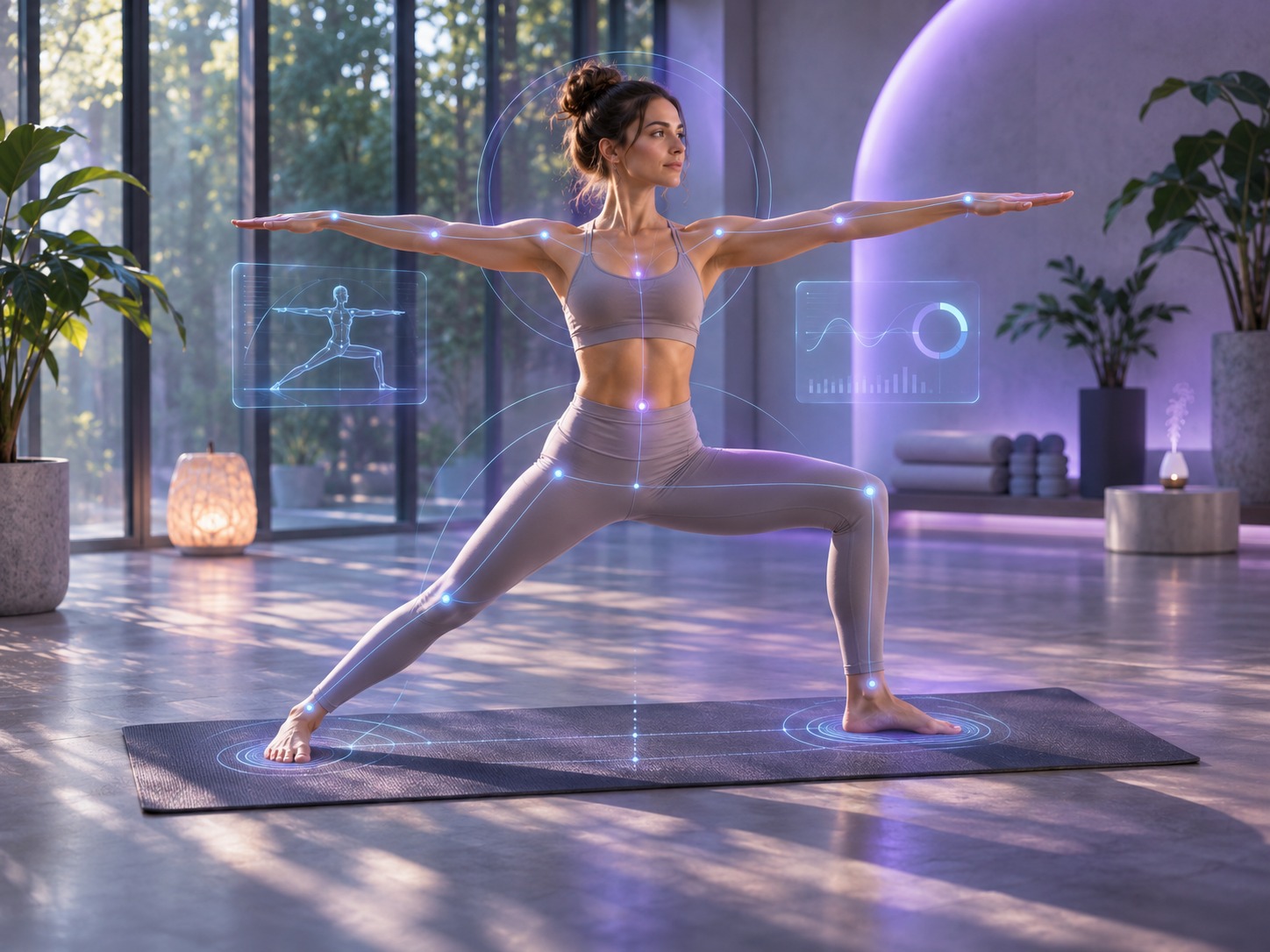
Artificial intelligence can recognize patterns in breathing, movement and certain physiological measurements.
It can generate meditation scripts, suggest relaxation exercises, and analyze information provided by users. But mindfulness involves more than measurable behavior. It includes subjective awareness: noticing thoughts without immediately reacting, recognizing emotions and experiencing the present moment.An algorithm may estimate that breathing has slowed. It cannot establish from that measurement alone whether a person feels emotionally safe, peaceful or connected to themselves.
This is where the distinction between technological intelligence and lived human experience becomes particularly meaningful.
Yoga invites us to develop awareness from within. AI, by contrast, primarily processes information that can be represented, recorded or inferred.
Both approaches may be useful, but they are not interchangeable.
Research: Yoga Practice Posture and Performance Feedback from Machine Vision (2026)
Journal: Engineering Proceedings
Read the 2026 machine-vision study
4. Will AI Replace Human Yoga Teachers?
One of the most significant questions concerns the future of yoga instructors. Could virtual teachers eventually replace human professionals?
AI may become increasingly effective at demonstrating postures, organizing sequences and providing basic movement feedback. For routine instruction, it could offer affordable and accessible alternatives. Yet human teaching involves qualities that extend beyond technical demonstration. An experienced instructor can notice hesitation, respond to discomfort, adapt communication and create an atmosphere of trust. A teacher also works with context: personal boundaries, confidence, motivation and the individual meaning of the practice. These qualities are not simply a collection of joint angles or movement data.
The future may therefore favor collaboration between human expertise and intelligent technology, rather than complete replacement.
Human instructors could use AI to support lesson planning and accessibility while preserving the relational and experiential dimensions of yoga.
5. Yoga as a Response to an AI-Driven Society
As AI automates more cognitive tasks, daily life may become increasingly efficient, but efficiency does not automatically create emotional well being.
A world of constant digital assistance could also bring new challenges involving attention, autonomy, identity and the relationship between humans and technology. In this environment, yoga may acquire a different kind of relevance.
Our own movement.
Our own breathing.
Our own awareness.
The physical sensations of balance, effort, fatigue and stillness. Yoga could become an important space for reconnecting with embodied experience in a society where more interactions occur through digital interfaces.
6. The Ethical Questions Behind Intelligent Yoga
As yoga technologies become more sophisticated, their development should also be accompanied by ethical considerations. AI systems may process sensitive information about movement, physical limitations, physiological responses, and personal well-being.
Important questions include:
Privacy: Who owns the information collected during a yoga session?
Consent: Do practitioners understand how cameras and wearable devices use their data?
Accessibility: Will advanced AI yoga tools become available to everyone, or only those who can afford them?
Safety: Can an automated system recognize situations where a movement should be modified or avoided?
Human autonomy: Will technology support personal awareness or encourage excessive dependence on constant feedback?
AI-generated recommendations should not be confused with individual medical assessment.
Technology can support a practice, but it should not remove personal choice, informed consent, or appropriate human supervision.
7. Yoga in 2035: A Possible Future
Picture a typical yoga experience less than a decade from now. You enter a peaceful studio where a human instructor welcomes you. There is an optional digital assistant that helps identify a sequence suited to your preferences and movement history. During the session, unobtrusive sensors may provide information about balance and movement. The instructor decides whether that information is useful, and the technology remains in the background.
There are no constant notifications, rankings or performance scores. At the end of the practice, the digital systems become silent. You sit comfortably, close your eyes, and observe your breathing. For a few moments, nothing needs to be measured. Nothing needs to be improved. You are simply present.
This is only one possible future, and it illustrates an important possibility: technology and traditional practices do not necessarily have to compete.
8. Ancient Wisdom, Future Intelligence
Yoga has evolved across cultures and generations while preserving philosophical ideas concerning awareness, discipline, self-study and the relationship between mind and body. Artificial intelligence may influence how yoga is taught, accessed and experienced. It may improve accessibility, support certain forms of personification and introduce entirely new learning environments, but its greatest contribution may depend on knowing when to step aside.
The future of yoga should not be defined exclusively by intelligent equipment or increasingly sophisticated algorithms.
Technology may help us understand how our bodies move. Yoga can help us explore what it means to inhabit them.
The OMBO Yoga Perspective
At OMBO Yoga, we see the future not as a choice between ancient traditions and modern innovation, but as an opportunity to bring them into thoughtful dialogue.
Artificial intelligence can become a useful tool for movement education and accessibility.
Yet conscious breathing, self-awareness, empathy and human connection deserve to remain central to the practice.
Because the future of well-being is not only about building smarter systems.
It is also about remaining deeply human in a world that is becoming increasingly intelligent.
OMBO Yoga — Mind & Body Oasis
Where ancient awareness meets the possibilities of tomorrow.