
There is a particular silence at the beginning of a Pilates class that I have always liked. The room is ready, the mats are down, everyone has arrived, but the class has not yet truly begun.
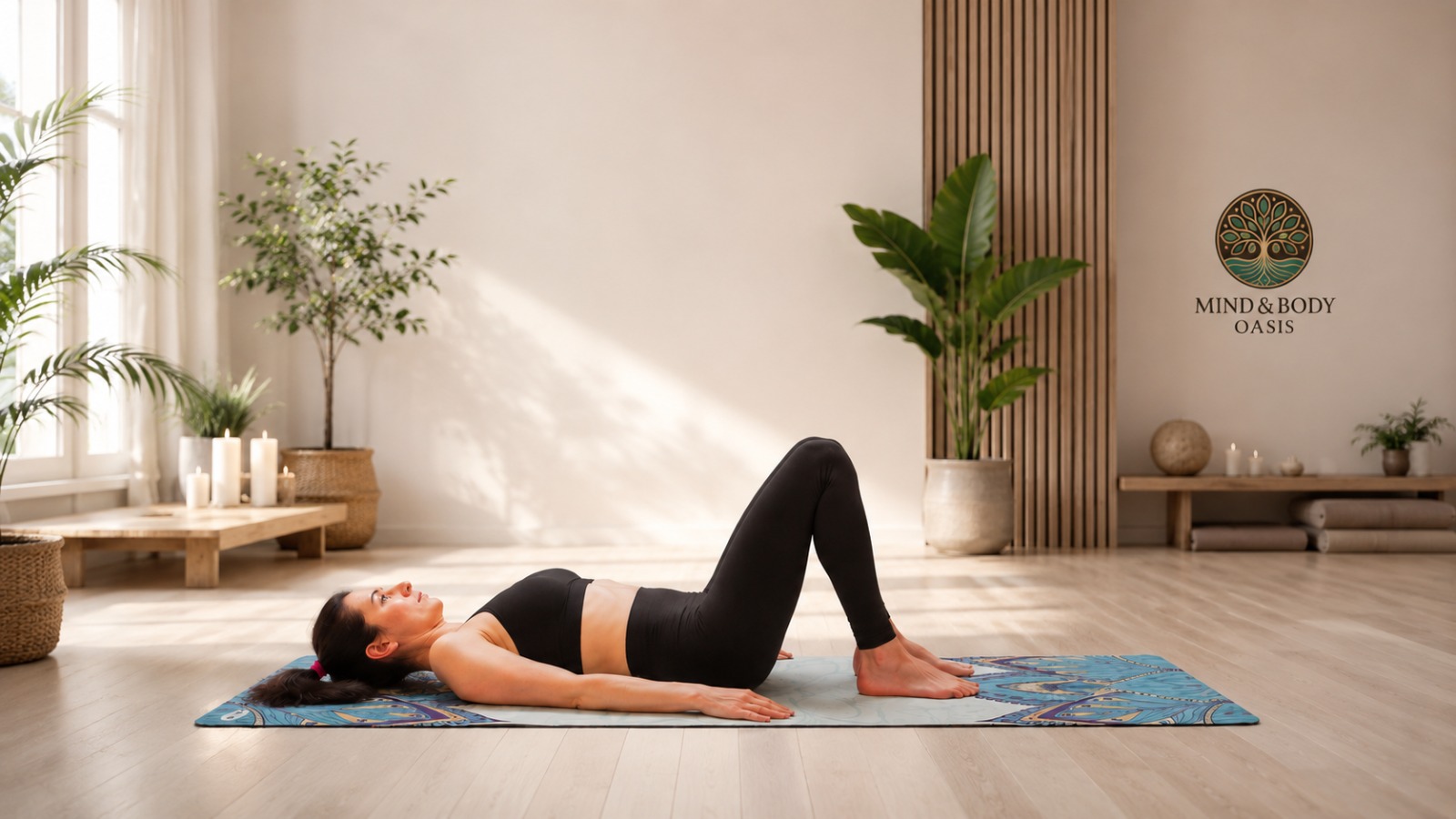
We lie on our backs with the knees bent and the feet resting on the floor, and for a few moments there is nothing to achieve. No graceful movement, no visible strength, no effort worth photographing. Then the teacher asks us to notice the pelvis.
Tilt it forward a little. Feel what happens to the lower back. Now tilt it back. Feel the spine soften toward the mat. Move slowly between the two positions. Do not force anything. Do not try to be good at it. Just notice. Somewhere between the two extremes, the pelvis settles into a quieter place. The lumbar spine keeps its natural curve, the ribs are not lifting dramatically, the buttocks are not squeezing, the abdomen does not need to become hard. You can breathe there.
Neutral.
I had done this many times before, but one day, lying there and moving slowly through those tiny pelvic tilts, I suddenly wondered why we do not always begin yoga in the same way.
In yoga, we speak so much about awareness. We speak about arriving on the mat, meeting ourselves where we are, breathing before moving, listening rather than forcing. Yet we can easily move from those beautiful ideas straight into the first posture without ever asking one very practical question: where is my pelvis right now?
It sounds almost too anatomical for yoga. And perhaps that is why we sometimes skip it. Pilates has always been more comfortable speaking openly about mechanics. Where is the pelvis? Where are the ribs? What happens to the lumbar spine when the leg moves? Can the trunk remain organised while the hip moves freely? Yoga often approaches the body through a different doorway. We breathe, feel, lengthen, ground, open, soften. But beneath those different languages, the same human body is moving.
And the pelvis sits at the centre of almost everything.
It is tempting to imagine the pelvis as something solid and still, a foundation beneath the spine, but it is much more alive than that. It tips forward and backward, rotates, shifts, responds to every step, every bend, every change of weight. The spine rises from it, and the legs move below it. The muscles of the abdomen, back, hips and pelvic floor continually negotiate around it. If the pelvis changes, the rest of the body responds.
The simple image often used in Pilates is that of a bowl filled with water. Tilt the bowl forward, and the water would spill over the front. The lower back usually arches a little more. Tilt it backward and the imaginary water spills behind you while the lumbar curve becomes smaller. Somewhere between those positions is a place where the bowl could hold its water. That is what we casually call neutral pelvis.
Neutral is not a perfect angle. It is not a position that can be measured once and then imposed on every body. Our skeletons are not identical. The shape of the pelvis differs from person to person. Hip sockets differ. Spinal curves differ. Muscle tension, mobility, age, injury, habits, work, sport and even how we feel on a particular morning can change the way we stand and move. So neutral should never become another way of telling someone that their body is wrong.
It is better understood as a reference point.
A place where we can say, for a moment, this is where I am, and once I began thinking of it that way, the relationship with yoga became obvious.
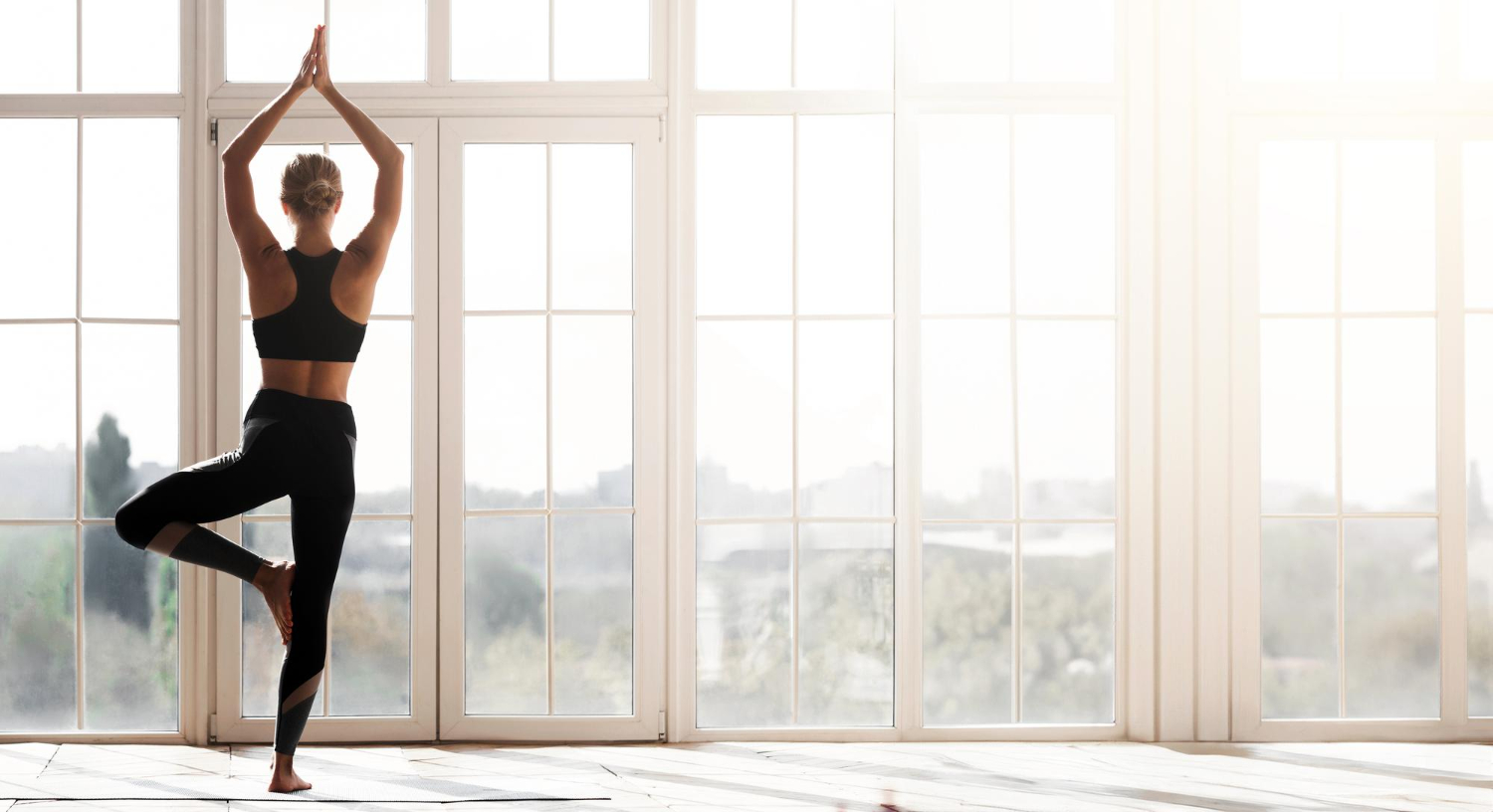
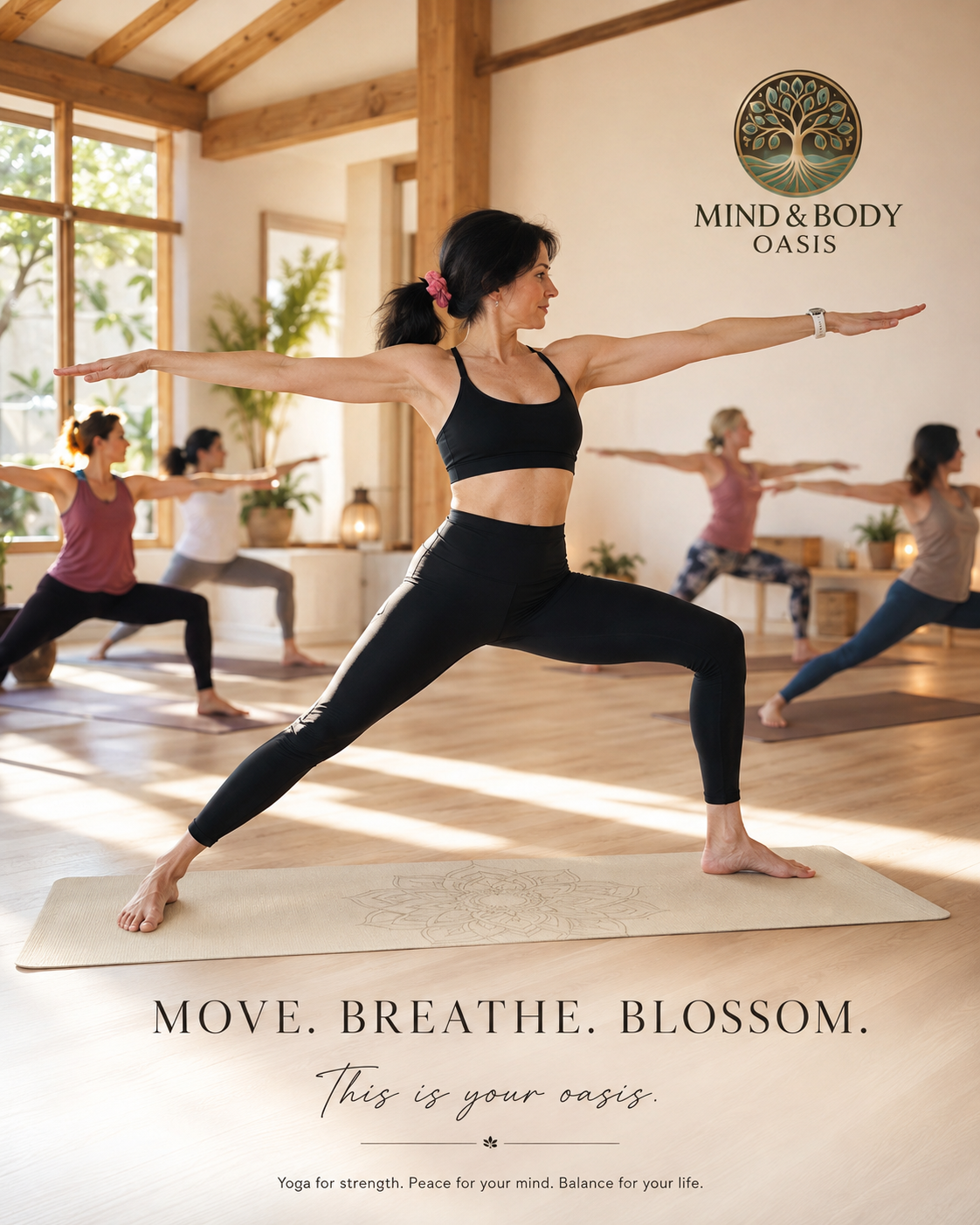
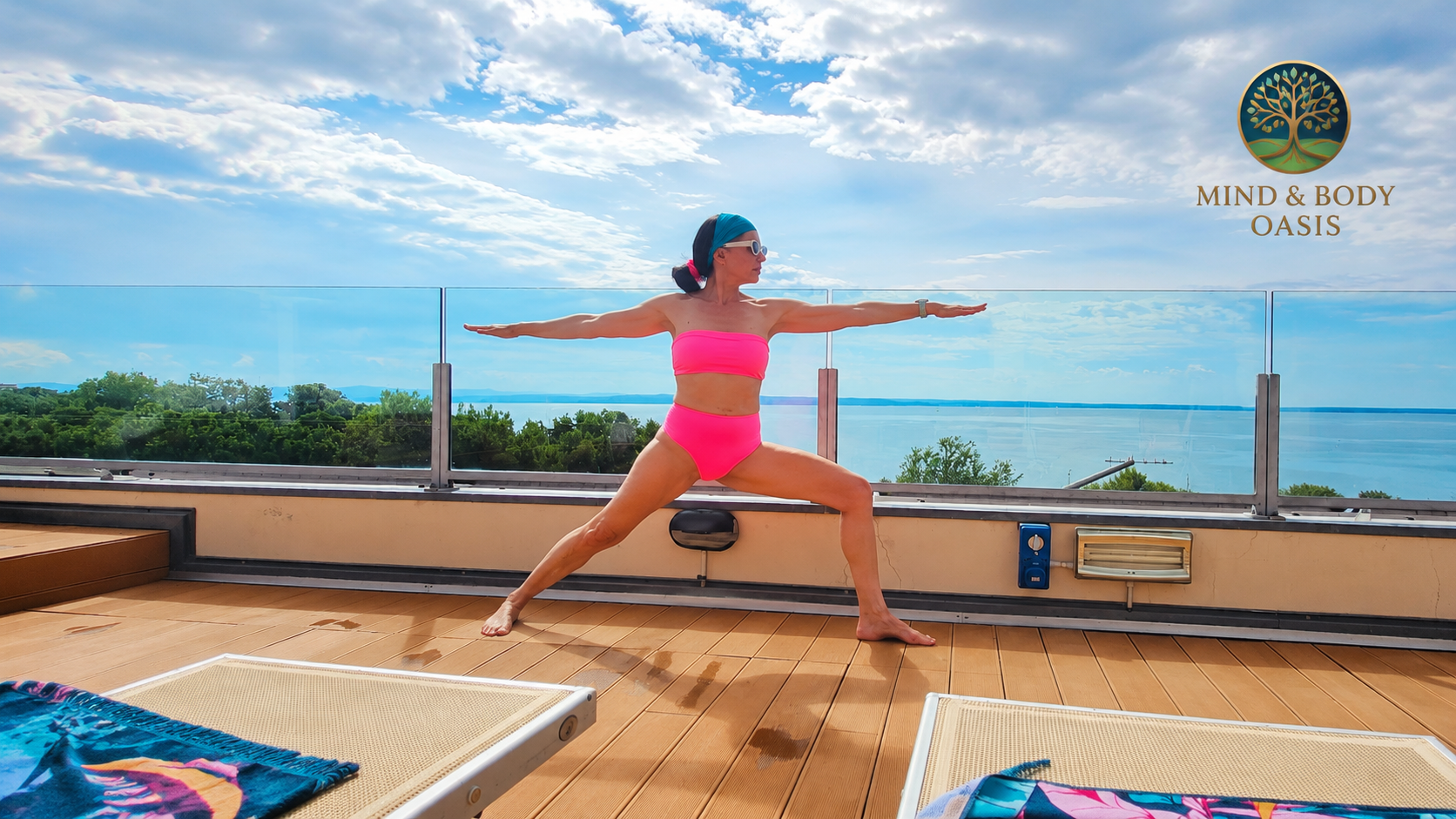
Yoga does not want us to stay neutral. In fact, yoga asks us to leave neutral almost immediately. In Cat–Cow the pelvis rolls in one direction and then the other. In a forward fold it rotates over the femurs. In a lunge, one side of the pelvis enters a completely different relationship with the hip than the other. In a backbend, the pelvis, lumbar spine, thoracic spine, rib cage and shoulders all have to negotiate how extension will be shared. In a balance pose the pelvis may make dozens of tiny adjustments that we barely notice.
Yoga is movement. Neutrality is not the destination. But perhaps it is useful to know the place we are leaving. It is like opening a map before a journey. The destination matters, but the first thing we need is that tiny blue dot saying: you are here. Without that information, we can still travel, but we understand less about the route.
The next time you begin a yoga practice, try lying on your back before doing anything else. Bend the knees and let the feet rest comfortably on the mat. Allow the arms to settle. Do not immediately arrange the body. Do not pull the belly in. Do not tuck the tailbone because someone once told you that was safer. Do not flatten the back. Just feel.
Notice the points of contact with the floor. Notice the weight of the pelvis. Notice whether there is space beneath the lower back. Then begin to rock the pelvis gently forward. The lumbar curve may increase. Come back. Roll the pelvis slowly the other way and notice how the back responds. Travel between those two positions a few times. The movement is tiny, but if you move slowly enough, there is a surprising amount to feel.
At some point between the two extremes, stop.
Can you breathe normally? Does the belly remain responsive rather than rigid? Can the ribs rest without being pushed downward? Can the gluteal muscles remain relatively quiet?
There is no prize for finding the “correct” position. What matters is that you begin to recognise your own organisation. Then stand.
Come into Tadasana and repeat the same exploration. Tilt the pelvis slightly forward and notice what happens above it. Perhaps the lumbar spine becomes more arched, and the ribs drift forward. Then move toward a posterior tilt and notice whether the buttocks tighten or the chest collapses slightly. Return somewhere toward the middle.
Nothing dramatic has happened, yet Mountain Pose may suddenly feel very different. You are no longer simply standing in a shape called Tadasana. You are discovering how your skeleton arranges itself against gravity. And then you begin moving.
Perhaps you fold forward and for the first time notice whether the movement begins at the hips or whether the spine tries to do everything. Perhaps you come into Plank and notice the exact moment when the pelvis drops and the lower back starts carrying more of the load. Perhaps you enter Cobra or Upward-Facing Dog and discover that what you had always called a backbend was mostly happening in the same few lumbar vertebrae.
This is where neutral becomes valuable. Not because we must preserve it, but because it gives us something to compare movement with. Once you know the quiet position, you can feel the change. The body begins to speak more clearly.
Underneath that small pelvic movement is a remarkably sophisticated system. The transversus abdominis, one of the deeper abdominal muscles, wraps around the trunk and contributes to pressure management and stability. The multifidus muscles close to the spine participate in fine control. The gluteal muscles help organise the relationship between the pelvis and femur. The hamstrings, adductors, hip flexors and deep rotators all influence pelvic movement. And woven through all of this is the breath.
The diaphragm descends when we inhale. Pressure changes inside the trunk. The abdominal wall responds. The pelvic floor participates. These structures are not separate departments working independently. Research increasingly describes them as parts of a coordinated system.
This is why the instruction to “engage your core” can be so misleading when it becomes “hold your stomach in all the time.”
A strong body is not a body permanently braced against life. A strong body knows when to create tension and when to release it. That is the difference between stiffness and stability. And Pilates understands this very well.
In Pilates, the challenge is often introduced gradually. First we discover the pelvis and spine. Then perhaps one foot lifts. Can the pelvis remain relatively organised? Then the lever becomes longer. The leg moves farther. Perhaps both legs eventually become involved. The exercise becomes harder, but the real question remains the same: can the body allow movement where movement is needed without losing support everywhere else?
That is not simply abdominal strength.
It is coordination.
It is timing.
It is the nervous system learning to make choices.
I think yoga benefits enormously when we bring that intelligence onto the mat, because yoga has its own temptation. We can become fascinated by the final shape.
How deep is the forward fold? How high is the leg? How far does the backbend go? Can the hands reach the floor? Can the heels touch the mat?
But the body does not experience yoga as a collection of photographs. It experiences the journey into the posture, the distribution of load, the breath during effort, the transition from one shape into another and, perhaps most importantly, the way we respond when the body says no. This becomes even more meaningful when movement is part of healing.
Healing does not mean that yoga can fix every painful back or that putting the pelvis in neutral will cure an injury. Pain is much more complicated than posture. But after injury, illness, surgery, prolonged inactivity, or simply years of protecting one area of the body, we can lose confidence in movement.
The body begins to avoid certain directions. Sometimes those adaptations are necessary. Sometimes they remain long after they are useful. We may not even know that we have changed the way we move.
In those moments, a neutral reference can feel like a place to return to, not a perfect position, just a familiar one.
From here, move a little. Come back. Move in another direction.
Come back. Notice.
Try again.
The process is almost like teaching the nervous system that movement still contains options. This is where the science becomes particularly interesting, because modern research has also begun moving away from the idea that one perfect posture protects us from pain.
For years, posture was often treated almost as a diagnosis. Too much anterior pelvic tilt was blamed. Too little lumbar curve was blamed. Uneven hips were blamed. The solution was usually to correct the visible shape. But human beings are not that simple.
Systematic reviews examining posture and low-back pain have not found a clean relationship in which one particular pelvic position reliably separates painful bodies from pain-free bodies. There can be differences between groups, but the evidence is variable, and posture alone cannot explain pain.
That is an important distinction. It does not mean alignment is irrelevant; it’s just that alignment is only one part of a much larger story.
Also, strength matters. Mobility matters. Sleep matters. Stress matters. Previous injury matters. Load matters. Fear matters. The nervous system matters. The amount of time we spend in a position matters. Our ability to change positions matters.
Perhaps health is less about finding the one correct posture and more about having enough capacity to move between many postures.
Yoga research points in a similar direction. Large reviews of people with chronic non-specific low-back pain have found that yoga can produce modest improvements in pain and function compared with no exercise. One major Cochrane review included more than two thousand participants across twenty-one trials. Structured yoga programmes have also shown improvements in back-related function in individual randomized studies.
But the fascinating part is that yoga does not appear to possess a mysterious advantage simply because it is yoga. When compared with other appropriate forms of movement or exercise, the differences often become smaller.
I find that reassuring rather than disappointing. It suggests that the human body is wonderfully pragmatic and responds to movement. It responds to gradually increased challenge. responds to strength, to confidence, to attention and repetition.
Pilates, yoga, physiotherapy, walking, strength training — they may speak different languages, but the body is listening for some of the same messages.
Can I move safely? Can I adapt? How do I create support without becoming rigid?
Can I explore a greater range without feeling threatened? Can I trust myself?
Perhaps this is why I keep returning in my mind to that quiet beginning of the Pilates class.
We are still lying there. The class has barely started. The pelvis rocks forward. Then backward.
Then settles somewhere between. It seems almost too small to matter.
And yet in those few moments we are learning something that may change everything that follows.
We are learning where we are before asking ourselves to go somewhere else.
So perhaps yoga should borrow this little ritual more often. Maybe it takes only a minute.
Lie down.
Feel the pelvis.
Rock forward.
Rock backward.
Find the middle.
Breathe.
Then begin.
And once you begin, let neutral go.
Let the pelvis move.
Let the spine bend.
Let the hips rotate.
Let the body explore.
Because neutral is not a cage. It is a home base, like a home, which, as you know it is is meaningful precisely because we are allowed to leave it.
Perhaps that is where Pilates and yoga meet most beautifully. Pilates says, find your centre; Yoga says, now move from it.
Pilates teaches us to recognise organisation; Yoga teaches us not to become imprisoned by organisation.
At OMBO – Mind & Body Oasis, this is how I like to think about alignment. Not as a collection of rules telling us where every bone should be, but as a conversation with the body we have today.
Some days the body needs stability, other days it needs space. Sometimes it needs strength; sometimes it needs softness.
Healing begins with movement, and sometimes it begins with something much quieter.
Before the first pose, before the first stretch, before asking the body to perform anything at all, we can simply stop for a moment and ask:
Where am I today? Then listen.
And from there, begin…